Product details:
KM982792G25 Elevator Tachnometer Encdoder From Factory
Part number KM982792G25
ESC PARTS
You can find the part number on the product or escalator and elevator manual, we are the professional elevator parts and escalator parts
So we can check the product based on the part number.
The price is not fixed, so you can contact us if you need the latest price.
| Elevator parts name |
Elevator Tachnometer Encdoder |
| Elevator parts hs code |
8431310090 |
| Part number |
KM982792G25 |
| Description |
The professional in the world
100% original new |
| Brand |
JIENESC
ESC PARTS |
| Warranty |
12 months |
Elevator parts diagram
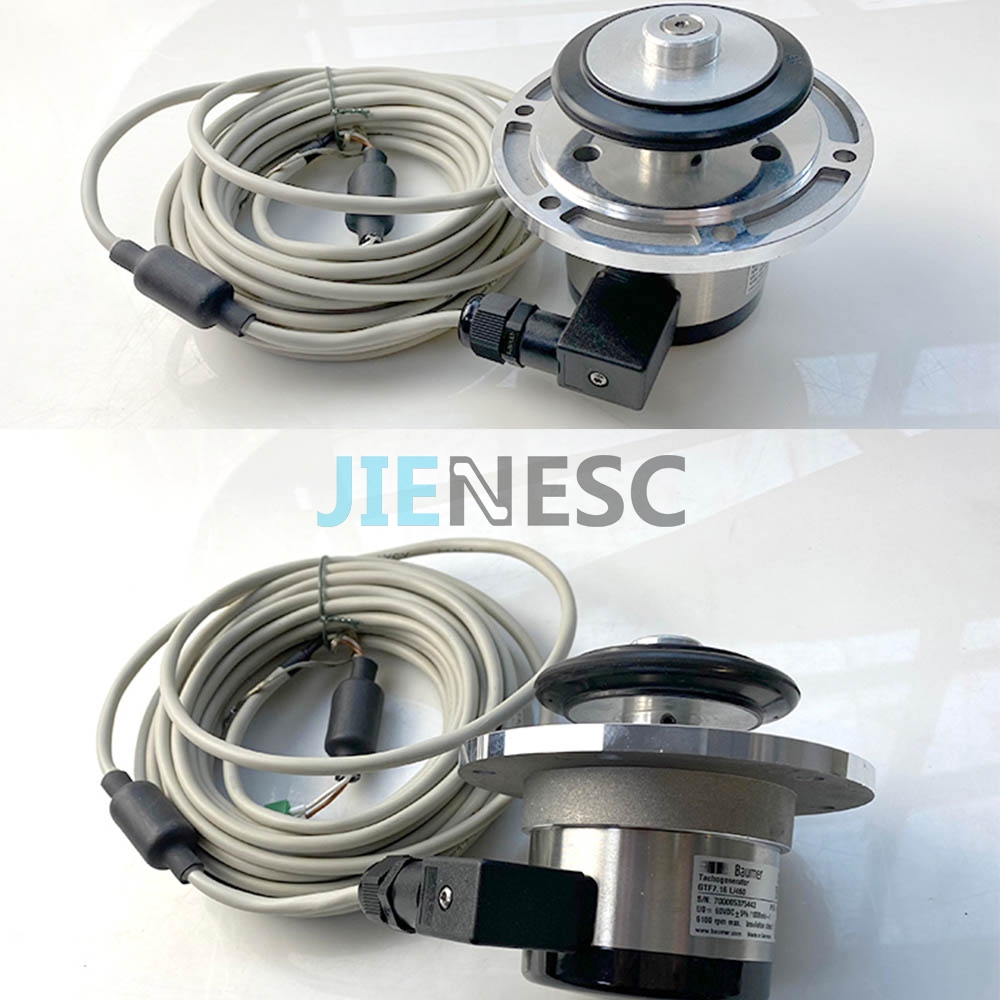
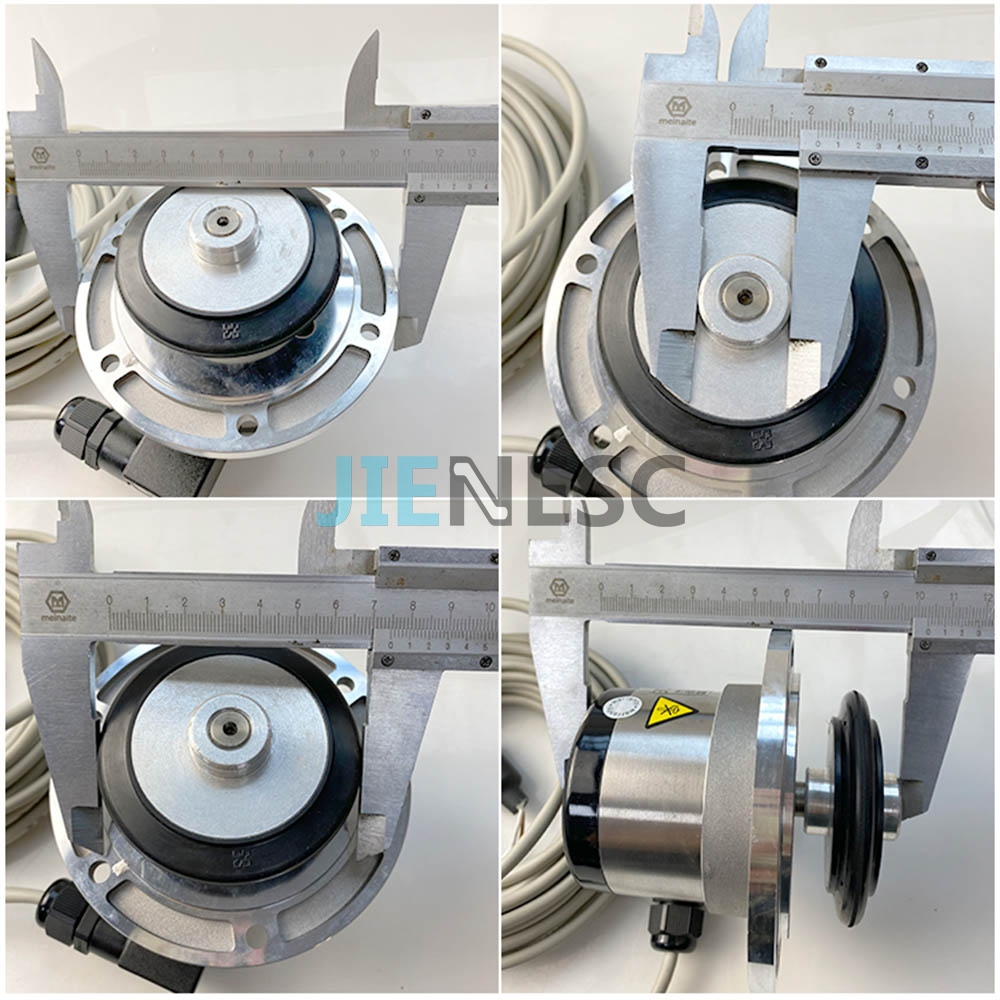
KM982792G25 Elevator Tachometer / Elevator Encoder – Replacement for Older KO Tachometers
What is KM982792G25?
KM982792G25 is a current-generation elevator tachometer, also commonly referred to as an
elevator encoder,
lift tachometer,
elevator speed sensor, or
tachogenerator.
The KM982792G25 is associated with the
HUBNER GTF 7.16L/460 tachometer configuration, with a
D75 friction wheel and 11 m cable.
It is widely used as a replacement elevator tachometer for a number of older KO spare-part references.
What is the model of KM982792G25?
The tachometer model associated with
KM982792G25 is:
HUBNER GTF 7.16L/460
Typical configuration:
- Friction wheel: D75
- Cable: 11 m
- Carbon brushes: Without carbon brushes
- Application: Elevator traction machinery
- Product type: Elevator tachometer / tachogenerator
The complete identification is:
KM982792G25 – HUBNER GTF 7.16L/460 – D75 Wheel – 11M Cable
Is KM982792G25 an elevator encoder?
KM982792G25 is primarily identified as an
elevator tachometer or tachogenerator. However, elevator maintenance engineers and spare-parts buyers frequently use the term
elevator encoder when searching for this type of speed-feedback component.
Therefore, common searches include:
- KM982792G25 elevator encoder
- KM982792G25 elevator tachometer
- KM982792G25 tachometer
- KM982792G25 encoder
- elevator tachometer replacement
- elevator encoder replacement
- lift tachometer
- elevator speed sensor
When ordering, the
exact part number and tachometer configuration should be used for identification.
What older part numbers are replaced by KM982792G25?
KM982792G25 is the current replacement reference associated with a number of older tachometer part numbers.
Commonly searched older references include:
- KM982792G16
- KM616254G04
- KM616254G08
- KM616254G09
- KM616254G14
- KM616254G16
- KM982792G04
- KM982792G08
- KM982792G09
- KM982792G24
Customers searching for these older part numbers should check the current replacement reference before purchasing old stock or used tachometers.
Is KM982792G25 a replacement for KM982792G16?
Yes.
KM982792G25 is used as the replacement reference for KM982792G16.
If you are looking for:
KM982792G16 replacement
or
KM982792G16 tachometer
the current replacement should be checked as
KM982792G25.
Is KM982792G25 a replacement for KM616254G04?
Yes.
KM616254G04 is an older tachometer reference associated with elevator traction machinery.
Customers searching for
KM616254G04 replacement can check
KM982792G25, while confirming the original equipment and tachometer configuration before installation.
Is KM982792G25 a replacement for KM616254G08?
KM616254G08 is an older tachometer part number.
For customers searching for
KM616254G08 replacement, KM982792G25 is a relevant current replacement reference to check. The original part number, equipment application, wheel size and cable configuration should be confirmed before ordering.
Is KM982792G25 a replacement for KM616254G09?
KM616254G09 is another older tachometer reference.
Customers looking for a
KM616254G09 replacement tachometer should check whether
KM982792G25 is the correct current replacement for their specific elevator application.
This is particularly important because different tachometer versions can have different friction-wheel diameters and cable configurations.
What is GTF 7.16L/460?
GTF 7.16L/460 is the tachometer model associated with KM982792G25.
When searching for this product, customers may use several different descriptions:
- HUBNER GTF 7.16L/460
- GTF 7.16L/460 tachometer
- GTF 7.16L/460 elevator tachometer
- GTF 7.16L/460 elevator encoder
- GTF 7.16L/460 D75
- GTF 7.16L/460 11M
- GTF 7.16L/460 D75 11M
- GTF 7.16L/460 replacement
The
wheel diameter and cable length are important when distinguishing different GTF tachometer configurations.
What does D75 mean on KM982792G25?
D75 refers to the friction-wheel configuration.
KM982792G25 is associated with the
D75 friction wheel, which helps distinguish it from other tachometer configurations using smaller friction wheels.
Therefore, customers should not identify the product only by the GTF 7.16L/460 model. The following should be checked together:
Part number + model + wheel diameter + cable length
Does KM982792G25 have carbon brushes?
KM982792G25 is supplied without carbon brushes.
When replacing an existing tachometer, customers should compare the original component and replacement configuration before installation.
How long is the cable on KM982792G25?
The standard KM982792G25 configuration is associated with an
11-meter cable.
It is commonly identified as:
GTF 7.16L/460 – D75 Wheel – 11M Cable
The cable length should be confirmed before ordering, especially when replacing an existing tachometer during elevator maintenance.
What is the weight of KM982792G25?
The approximate
gross shipping weight is 4 kg.
Actual net weight may vary depending on packaging and accessories.
For international orders, customers should use the supplier's confirmed packed weight when calculating freight costs.
How much does KM982792G25 cost?
The typical market price for a
genuine new KM982792G25 is around
USD 650, depending on availability, quantity, supplier, shipping terms and market conditions.
Because this is a relatively high-value elevator spare part, customers may find substantially different prices from different suppliers.
A very low price should be checked carefully, especially when the product is described as new and original.
Are there counterfeit KM982792G25 tachometers?
There are many different sources offering products under the
KM982792G25 part number, so buyers should carefully verify the product before purchase.
When sourcing this tachometer, check:
- Part number: KM982792G25
- Tachometer model: GTF 7.16L/460
- Friction wheel: D75
- Cable length: 11 m
- Product condition
- Nameplate and product markings
- Packaging
- Product traceability
- Supplier warranty
For elevator maintenance applications, it is important to confirm that the supplied tachometer matches the required specification rather than selecting solely on price.
What is the lead time for KM982792G25?
The normal lead time for
KM982792G25 is approximately 7 days, subject to stock availability.
For urgent elevator maintenance projects, customers are advised to confirm current stock and dispatch date before placing an order.
Where can I buy KM982792G25?
KM982792G25 is available through professional elevator spare-parts suppliers specializing in elevator traction machinery and replacement components.
When requesting a quotation, use the complete identification:
KM982792G25
HUBNER GTF 7.16L/460
D75 Wheel
11M Cable
Providing the complete configuration helps prevent confusion with other tachometer versions.
Can KM982792G25 replace an older elevator tachometer?
KM982792G25 is used as a current replacement reference for multiple older tachometer part numbers.
These include:
KM982792G16
KM616254G04
KM616254G08
KM616254G09
KM616254G14
KM616254G16
KM982792G04
KM982792G08
KM982792G09
KM982792G24
However, the original part number and elevator application should always be checked before installation.
KM982792G25 Technical Specification
| Item |
Specification |
| Part Number |
KM982792G25 |
| Component |
Elevator Tachometer / Tachogenerator |
| Common Search Term |
Elevator Encoder |
| Model |
HUBNER GTF 7.16L/460 |
| Friction Wheel |
D75 |
| Cable Length |
11 m |
| Carbon Brushes |
Without carbon brushes |
| Application |
Elevator traction machinery |
| Approx. Gross Weight |
4 kg |
| Typical Market Price |
Around USD 650 |
| Typical Lead Time |
About 7 days |
KM982792G25 Related Search Terms
KM982792G25
KM982792G25 tachometer
KM982792G25 elevator tachometer
KM982792G25 elevator encoder
KM982792G25 encoder
KM982792G25 replacement
GTF 7.16L/460
GTF 7.16L/460 tachometer
GTF 7.16L/460 elevator tachometer
GTF 7.16L/460 elevator encoder
GTF 7.16L/460 D75
GTF 7.16L/460 11M
HUBNER GTF 7.16L/460
HUBNER GTF 7.16L/460 D75
elevator tachometer replacement
elevator encoder replacement
lift tachometer replacement
KM982792G16 replacement
KM616254G04 replacement
KM616254G08 replacement
KM616254G09 replacement
KM616254G24 replacement
More
Escalator step
 |
Escalator step chain
 |
Escalator roller

|
Escalator comb plate
 |
Escalator step demarcation
 |
Escalator switch&sensor
 |
Escalator handrial inlet
 |
Escalator brake magnet
 |
Escalator friction wheel
 |
Escalator pcb
 |
Escalator handrail
 |
Escalator transformer
 |

|
ESC PARTS has more than 10 years of experience in elevator and escalator spare parts and has now become a professional supplier in China.
Based on our own 1500㎡ elevator parts warehouse inventory, we are now the largest elevator and escalator repair parts supplier in China.
Our warehouse stores more than 16,000 elevator repair parts, all of our products are 100% brand new and original.
Choosing ESC means high-quality service and 100% original product quality.
Professional
1,We have 10 Years of experience in elevator and escalator spare parts field.
2,We cooperation with lots of enginners from famous elevator companies so we can supply strong technology supports.
Perfect Quality Control
1,When the goods arrive at our warehouse, our engineers will check the condition of the goods before they are put into the warehouse.
2,Our engineers will check every goods again before the order is shipped!
3,We always insist on ensuring that our customers' goods are original and accurate, so that our customers will not have any additional costs for each order.
Good After-Sales Service
1,We supply customer goods quality guarantee. We provide super-value after-sales guarantee, and we provide repair and replacement services for product quality problems.
2,We provide 2 years warranty service for many products (for example: Step Chain, Rollers, Steps etc..)
Stock-Fast Delivery
1,We have over 16000kinds elevator and escalator parts in Stock
2,We have stock for most elevator parts and we can delivery goods in 2 days after your payment arrived
Competitive Price
1,Huge purchase volume help us get the very nice price from other factories.
2,We can apply discount for your details requirements and quantity based on same quality products.
3,We accept price comparison, if you have a lower price to us, we can apply for a more favorable discount price for you immediately
4,We supply OEM service and give you more lower cost solution.
|
Today, safety elevator brake magnets are indispensable safety features in modern elevator drives. Our power transmission, the global market leader in elevator brake magnets, is highly concerned about elevator safety and strives to contribute to the safety of the elevator industry.
Therefore, we have always designed safe and reliable elevator brake magnets. All our electromagnetic safety brakes operate according to the fail-safe principle – they are closed in a de-energized condition.
But what makes an elevator brake magnet safe and reliable? The following points should be taken into account.
1. The right static friction coefficient elevator brake magnets
Holding the elevator in position requires a certain static torque. Such torques must be provided under all specified ambient conditions (0° to 40° C) throughout the entire lifetime.
2. Friction work of elevator brake magnets
The static torque applies when the elevator car is reliably held in position. In the case of an emergency, however, the brake has to slow down the car to a halt. So dynamic torque is important for a safe and reliable brake as well.
3. Switching times of elevator brake magnets
A constant switching time throughout the entire lifetime is essential to fulfill the requirements of EN81-20. A reliable brake must have a reproducible switching time to keep the specified braking distance.
4. Stroke of the elevator brake magnets
The stroke of the brake is important to release the brake and guarantee a reliable signal that must be received from the micro switch. The risk of malfunction at high temperatures is immense in the case of thermal expansion.
5. Noise testing of elevator brake magnets
When a brake is new, switching noise is nonexistent and lies below 50 dB (A), a value many brakes in the market achieve. However, after several million switching operations the brake should still be silent – a much bigger challenge.
1. Introduction of elevator brake magnets
The world of buildings is defined by superlatives – landmark skyscrapers impress people worldwide and the chase for the highest tower never seems to slow down. Well hidden behind steel and glass, innovation does not stop. Leading elevator companies are continuously setting new standards in their industry and pushing the limits of what is possible. This development brings some challenges, especially in the field of elevator drives. The elevator market demands smaller, faster, and cost-optimized drives.
The safety brake is one of the most important drive components for an elevator. With the ongoing trend towards higher power density, the requirements within the specifications of leading elevator manufacturers have increased as well. Some requirements are new or higher than in the past and have to be evaluated first. Another point to be considered: The brake has to fulfill the requirements over the entire lifetime, not only when it is brand new. There is no compromise on safety, especially when the health and safety of people is at stake. Therefore, a proper qualification process for brakes that enter the market is mandatory, ideally together with drive manufacturers. All new requirements must be checked to avoid any problems in the field.
On the other hand, we as manufacturers of safety brakes recognize that the elevator industry has to be increasingly cost-efficient to survive in the aggressive market. That confronts us with some serious questions: How does cost-cutting affect safety? More important: Can we shrink budgets and still keep up safety levels? The difficulty of reflecting the full effects of cost-cutting is surely one of the important challenges that the elevator market faces.
Thus, a complete understanding of how cost and production pressure affect safety is important to be able to prevent the undesired effects that may arise. Cost cutting is necessary, but it should be done with caution.
We, as a leading global brake manufacturer, follow the new standards and work hand in hand with our partners to find solutions for the new requirements. To achieve a solution for the cost-safety problem, however, we have to answer another question first: What makes an elevator brake safe and reliable?
2. How Safe elevator brake magnets Work
Today, safety elevator brake magnets are an indispensable safety feature in modern elevator drives. To be safe, these elevator brake magnets have to comply with basic safety principles that we as brake manufacturers consistently follow during development and manufacturing. First of all, the electromagnetic safety elevator brake magnets operate according to the so-called fail-safe principle - they are closed in a de-energized condition. The braking torque is generated by the force stored in the thrust springs as shown in picture 1. When the magnetic coil is energized, a magnetic field is built up which attracts the armature disk against the force of the springs, thereby releasing the rotor with the friction linings. The elevator brake magnets are released. This condition can also be achieved using an integrated hand release.
The elevator brake magnets developed for the elevator sector are mainly used as holding elevator brake magnets, which means that they hold the elevator cabin in its position once it stops regularly. However, in the case of EMERGENCY STOP braking actions, the brakes have to take on friction work. This kind of dynamic elevator brake magnet action requires deep know-how regarding the whole friction system.
This is a very short description of a secure elevator brake. A deeper look into the respective points makes clear what is needed to make an elevator brake safe and reliable. Five key points have to be considered:
3. The Right Friction Coefficient of elevator brake magnets
Elevators are getting faster and faster – a clear trend in the elevator market. To keep up with growing speeds, elevator brake magnets have to be increasingly powerful. The friction system, consisting of brake lining and friction surface, is the basis for the technical dimensioning of the braking system. The most important tribological system parameter is the friction coefficient μ.
The elevator brake magnets torque over lifetime is a result of the following formula:
M = Fomin x N x μmin x r m [Nm]
The variables are as follows:
Fomin Spring force [N]
N Amount of friction surfaces [-]
μ friction coefficient [-]
r m Friction radius [m]
One of the main tasks for a brake manufacturer developing a new friction material is to achieve a friction coefficient μ that is stable within the framework of the dimensioning. Therefore, they have to attend to the variables influencing the determination of the friction coefficient. The effects of ambient conditions like temperature on the friction coefficient μ have to be considered as well as a period of use spanning more than 20 years. The friction coefficient of friction linings is in most cases tested on a flywheel test stand like the one in picture 2.
An electric motor accelerates a flywheel, and the tested braking system breaks it down. As an elevator brake magnet manufacturer, we can test various ambient conditions. The friction coefficient must remain constant even at low temperatures, as shown in the picture
3. The friction lining has to show a constant coefficient between 0 and 40 degrees Celsius.
4. Friction Work of elevator brake magnets
The static elevator brake magnet's torque is sufficient to hold the elevator car in position under normal conditions. But in the case of an emergency, the elevator brake magnets system must provide enough dynamic brake torque as well. In these cases, the brake has to engage quickly to reduce the acceleration of the car and help bring it to a standstill.
New drive generations are working at much higher speeds than ever before. That leads to higher friction work if an emergency occurs, and dynamic braking is necessary.
The latest specifications show substantially higher friction values than in the past. That puts manufacturers in front of some challenges when using standard friction linings: Their braking torque may fade at high-speed braking. The reason is the high temperature on the friction surface that reduces the friction coefficient, as shown in picture 4. The fading of the friction coefficient during the braking can lead to critical situations. It may even happen that the brake is no longer able to decelerate the car – with unforeseeable consequences for material and passengers. The brake manufacturer therefore has to find a friction material with a stable behavior even during excessive friction work.
5. Stroke of the elevator brake magnets
The stroke of a brake, i.e., the distance the armature disk has to move before the brake is closed, is an important factor for its reliability. The bigger the stroke, the more reliable micro switches work. As a manufacturer of reliable safety brakes, we therefore recommend a stroke of more than 0.32 mm. But why is that?
High temperatures affect the microswitch function. Increasing temperature will lead to expansion of the material and therefore change the operating points of the switch. The smaller the air gap, the more difficult to find the right switching point – if the elevator brake magnets get only a little too warm and the material expands too much, the micro switch can be triggered unintentionally. This may result in serious consequences, even to the point of malfunctions of switches in the field with all kinds of unwanted effects. To provide reliable braking systems, the brake manufacturer therefore has to find the right balance between minimum stroke for short switching times and a sufficient air gap securing the function of the micro switch. Picture 5 shows the interrelation of temperature and stroke.
6. Noise Testing
Now we learned that a minimum stroke of >0.3 mm is necessary for the micro switches to work reliably, so the brake is designed to provide that air gap. A larger stroke, however, comes at a price: There is a substantial disadvantage regarding noise levels. The larger the stroke, the louder the brake. Elevator manufacturers, however, require silent brakes to make their products as comfortable as possible.
If a brake with a large stroke has to remain silent, ideally over its entire lifetime, a very stable damping system is required. Such a damping system is characterized by the fact that it is not only quiet when new, but also after several millions of switching actions with a stroke of >0.3 mm. A stable damping system can be achieved by adjusting each damper individually, as can be seen in picture 6. This ensures that each brake can be individually adjusted to a low noise level.
To get a production release for the brakes, they have to be tested extensively. Each brake goes through five million switching operations in our test lab, shown in picture 7.
In a special noise measurement room, the noise level of the brake is tested in order to ensure its noise emission is within the limits.
The graph in picture 9 clearly shows the results of these efforts. Even after 3.5 million switchings, the noise level of the brake does not exceed 60 dB and therefore lies under the noise level of other drive elements, such as the motor or gearbox. Under normal circumstances, this means that the brake is not audible within the elevator, even after years of regular use.
7. Switching times
in order to fulfill the requirements of the elevator codes, the switching behavior of the brake must not vary over the entire lifetime. The switching time of the brake has to remain within the limits of the specification in order to calculate the right stopping distance of the elevator car. And here again, noise prevention comes into play: The damping system has a substantial influence on the switching time. This comes with a degeneration process some dampers undergo over time. Temperature for example has a major influence on the aging of the damping system. There are damping systems on the market where aged or completely destroyed dampers can cause a significantly longer switching time. In a worst-case scenario, the brake switches too slow to guarantee the correct stopping distance, and the elevator car shoots over the defined halting point.
The reasons that switching times change over time, or in turn keep constant, are complex and the difference lies in the detail. To ensure reliable switching times, all brake components have to be dimensioned safely and have to be made of high-quality, known, and proven materials. Furthermore, brakes should be equipped with a stable, reliable damping system. Basically, every brake comes with a short switching time when it is new. However, the same is true here as it is for the noise level – the long-term behavior is important. Long-term tests confirm that operational switching time levels remain low even after 300,000 switching actions. This holds true for an even longer lifespan. The switching time of our brakes is still substantially below the level of other elevator brakes in the market after several million switching actions. The graph in picture 10 shows how the switching time hardly changes anymore once the brake is run in.
8. Summary
To sum up the criteria detailed before: A safe and reliable elevator brake has a friction system that is made for the purpose, so it provides a constant and sufficient braking torque over its entire lifetime. It has a sufficient stroke that allows for micro switches to work properly, even when the brake heats up. The brake keeps a constantly low noise level and a switching time compliant with the specification even after several millions of switching actions.
Most problems in the field can be traced back to one of the points described: Increasing noise and switching times due to degrading and eventually failing dampers, lack of braking torque due to wrong dimensioning, insufficient torque calculations and unfit friction systems, failing micro switches because of insufficient stroke of less than 0.2 mm.
This all shows that innovative solutions and deep know-how make a high-performance density possible and thereby reduce costs as far as possible while still providing safe and reliable brakes. However, there are certain limits. Especially when people are involved, there must not be any compromise on safety. Our aims are for the best compromise between safety, reliability, and costs. A technologically leading friction system, together with consistently observed safety principles make us able to produce safe, reliable brakes with an extremely high-performance density. In combination with monitoring modules of the latest generation, which enable permanent brake monitoring, this is what is called brake technology 4.0 – a perfectly coordinated complete system.


 USD
 EUR


